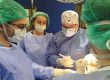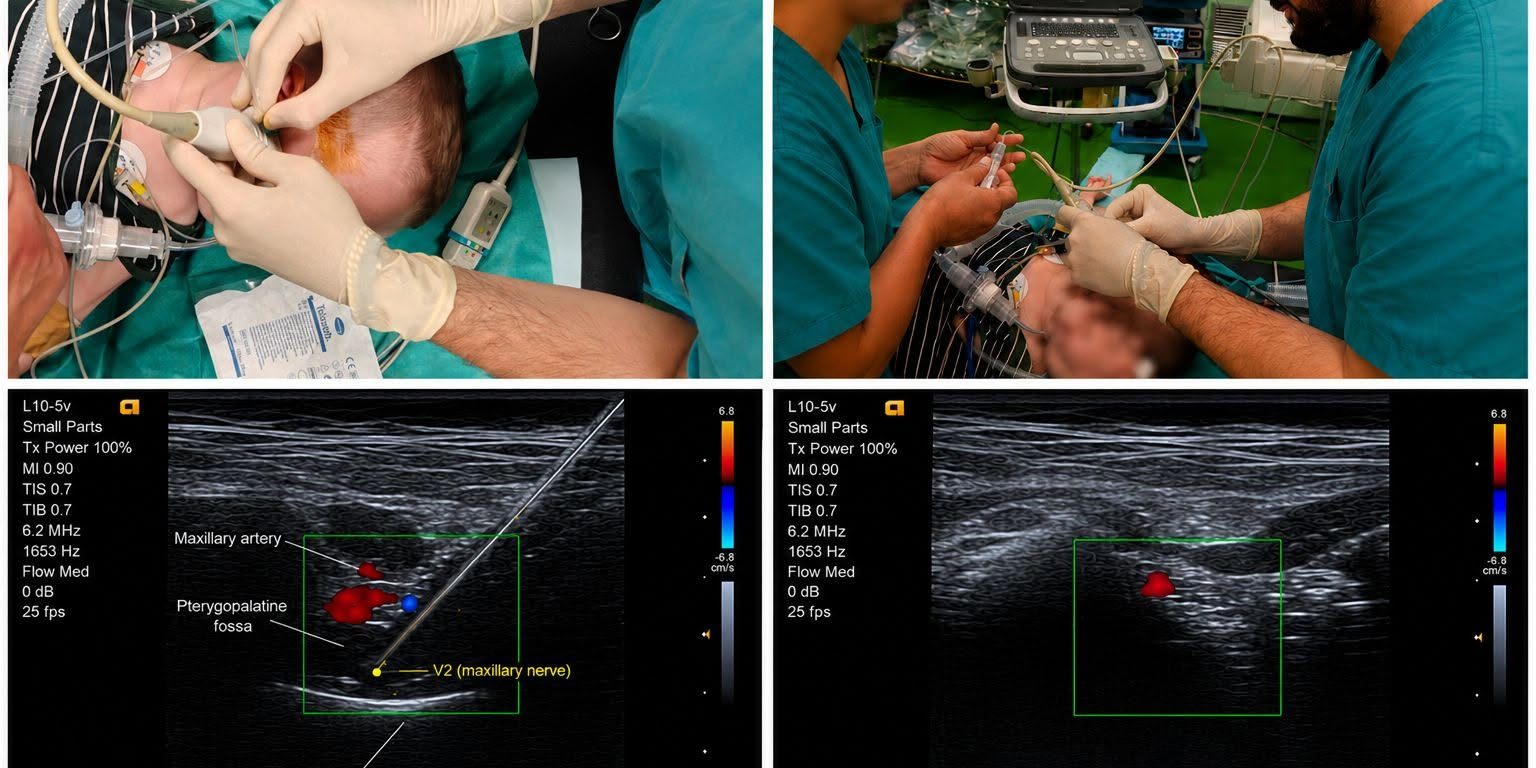
Last week, for the first time at the University Clinic of TOARILUC, Dr. Filip Naumovski performed a bilateral suprazygomatic block of the maxillary nerve (V2) in a child weighing 11 kilograms, where reconstruction of the soft and hard palate was performed.
Increasingly, everyday anesthesia practice involves the use of ultrasound-guided nerve blockade techniques aimed at reducing the perioperative use of opioids and associated complications.
According to the largest study, the PROSPECT trial, and modern guidelines and recommendations for anesthesia for surgical interventions on the soft and hard palate, the use of the ultrasound-guided suprazygomatic block of the maxillary nerve is recommended as a regional anesthesia technique of choice that is complementary to general anesthesia.
The use of this block has been shown to be associated with less pain in the postoperative period and less opioid use, while children are calmer upon awakening and start feeding faster (Peters J. et al., 2024). Better analgesia and less opioid use were also observed in the study by Chiono et al. The most recent retrospective study confirms the conclusions of previous researchers by specifying that the use of the suprazygomatic block of the maxillary nerve reduces the need for fentanyl and other opioids by 55% (Bunnell A. et al., 2026).
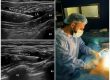
Performing this technique requires previous experience with performing ultrasound-guided techniques of peripheral nerve blocks, taking into account that the maxillary nerve moves in the pterygopalatine fossa, which at first glance seems like an infinite depth through which you move the needle and you have a feeling that there is no end, but with a little patience and careful guidance of the needle towards the floor of the fossa where the maxillary nerve passes, performing this technique is safe.
On the way to the maxillary nerve, the needle is passed through the temporal muscle and the pterygopalatine muscle, along the maxillary artery, and all the way to the floor of the fossa.
Special attention should be paid to the maxillary artery, which is on the way to the desired location for placing the local anesthetic, in order to avoid its injury or sudden intra-arterial placement of the local anesthetic. For this purpose, before performing the block, verification of the maxillary artery using Color Doppler is necessary, as in the image below. The recommended dose of local anesthetic is 0.15-0.2ml/kg 0.25% Bupivacaine.
The intraoperative and early postoperative course was uneventful, which means suprazygomatic maxillary nerve block is a safe technique offering significant perioperative analgesia in cleft and palate surgery